

Houston IT SupportStop babysitting your tech.
Start running your business.
Braintek gives growing Houston businesses a proactive IT department that helps them grow, with real technicians, fast response, and security built in. And when a hurricane or hard freeze shuts Houston down, our team keeps you running.
★★★★★ 4.9 from 367 Google reviews · 20+ years in Houston
Get the IT Buyer's Guide
What every Houston business owner should know before hiring an IT company — the questions to ask and the red flags to avoid.
Get the free guide- Flat monthly pricing — no surprise bills
- ~10-minute response to a real tech
- Security & backup included
 BBB AccreditedBetter Business Bureau
  4.9 rating360 Google reviews
  Chamber MemberThe Woodlands Area Chamber
  Claude Certified DeveloperAnthropic, 2026
  Certified TechniciansCompTIA A+, Network+, Security+, Cisco CCNA
  Featured NationallyMSP Success & MSP Cybersecurity Magazine
  Since 2002Serving Texas businesses
 Who we are
Houston's managed IT services company since 2002
Braintek is a Houston managed IT services and IT support company that runs technology for small and mid-sized businesses, typically 10 to 200 employees, across the Houston metro. Since 2002, we've given growing companies a complete, proactive IT department covering monitoring, helpdesk, cybersecurity, backup and disaster recovery, and IT strategy, for one predictable monthly fee. If you've been searching for dependable IT support in Houston, this is what we built Braintek to be: a local IT support company with real technicians on the ground, not a call center. We also serve the Dallas–Fort Worth metroplex from our Fort Worth office.
We don't just keep the lights on — we use technology to help your business grow and make money, and we'll help you put AI and automation to work safely. We're also built to keep you running when others can't: our team includes technicians here in Texas and a dedicated group of our own employees outside the Gulf Coast — so when a hurricane or hard freeze shuts Houston down, your support doesn't. When the city goes offline, your business doesn't have to.
We answer fast, prevent problems instead of reacting to them, and we're straight with you — no surprise invoices, and we never hold your data hostage. Many clients have been with us for two decades. Whether you need fully managed IT, co-managed support, or help after a security scare, we tailor the right mix after a short discovery call.
Local & on the ground
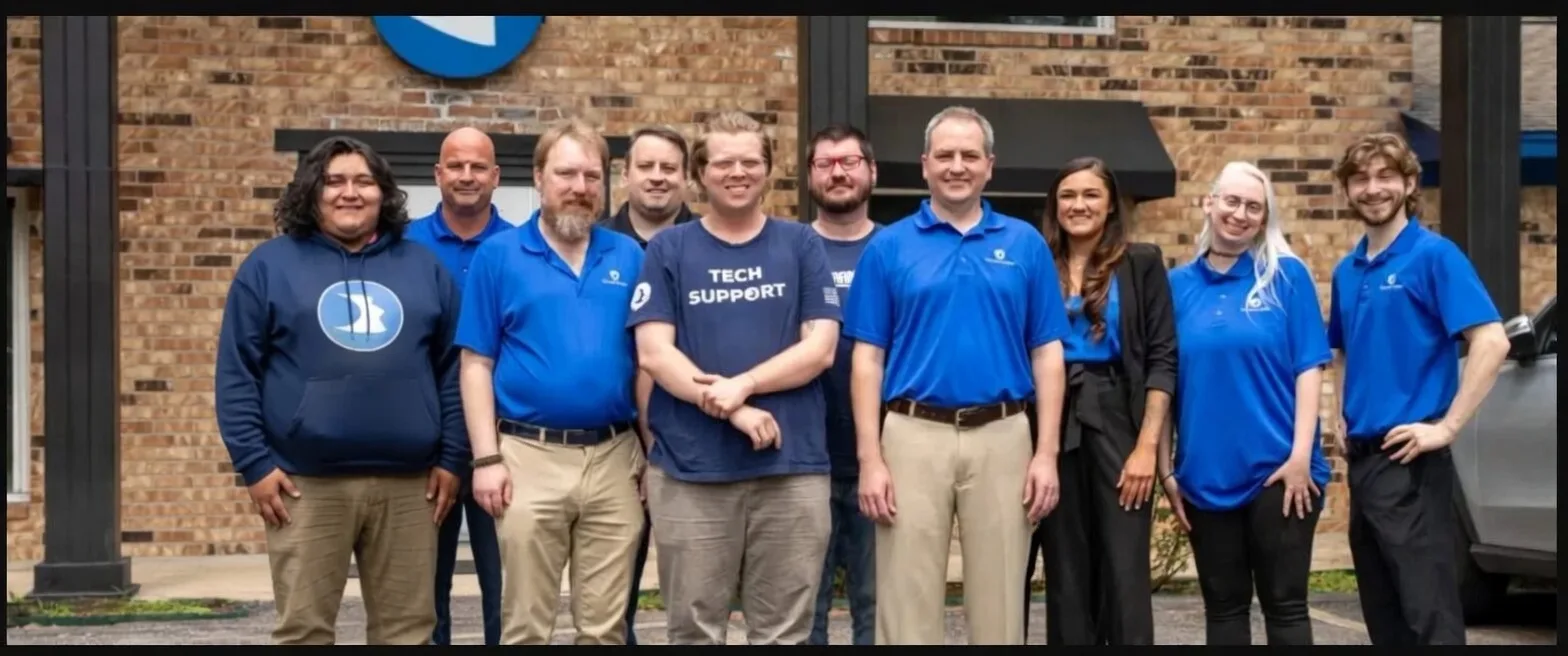
Real Technicians, Across the Houston Metro
When something needs hands on the hardware, we send a technician who already knows your network — not a stranger reading a ticket for the first time.
Sound familiar?
If your technology is creating more problems than it solves, you're not alone
Braintek fixes the root cause — then turns your technology into something that helps your business grow.
What we do
Everything You Need From One Local IT Partner
From day-to-day support to security, cloud, and AI, one team handles all of it, fully managed or alongside your own people.
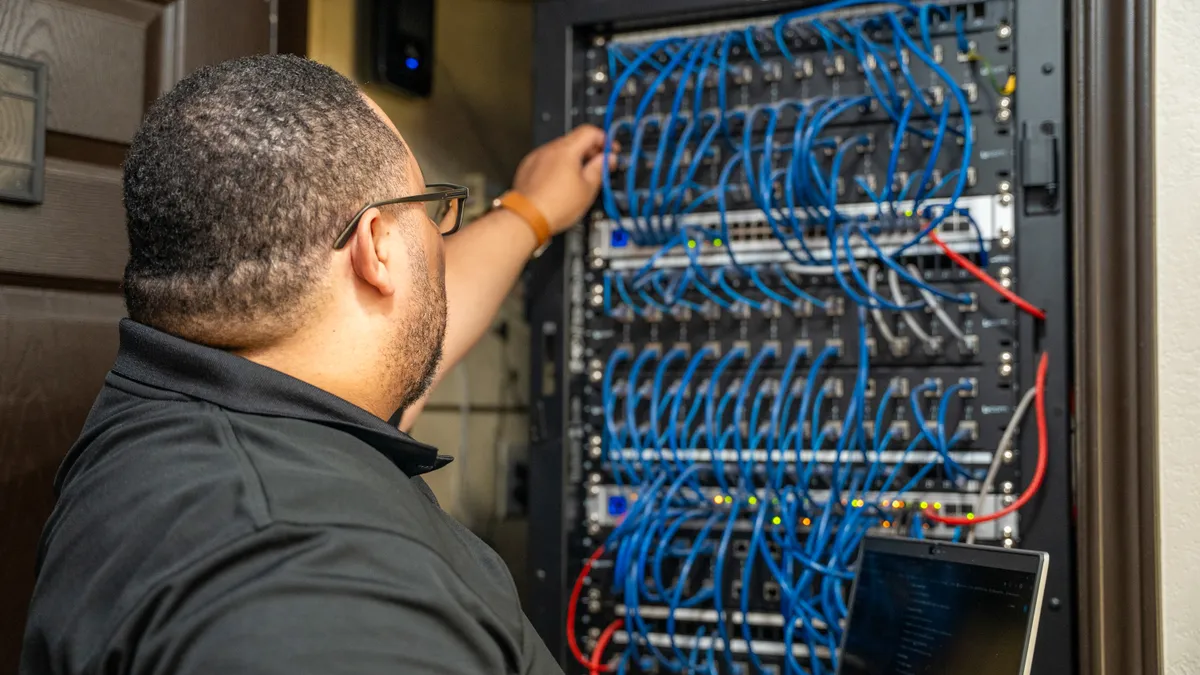
Managed IT Services
Your outsourced IT department, monitoring, helpdesk, and strategy for one flat monthly fee.
Learn more →Cybersecurity
Layered protection: MFA, EDR, patching, backup, and awareness training.
Learn more →IT Help Desk
Fast, friendly support from real technicians who know your network, calls answered in under a minute.
Learn more →Data Backup & Recovery
Documented, tested backups so you recover fast from ransomware or failure.
Learn more →Microsoft 365
Setup, security, and management of your Microsoft cloud.
Learn more →Microsoft Azure
Migration, Azure Virtual Desktop, backup, and cost management, fully managed.
Learn more →Network Support
Design, cabling, Wi-Fi, and 24/7 monitoring for the network everything else runs on.
Learn more →Co-Managed IT
Backup and specialty support that makes your in-house IT team stronger.
Learn more →AI Enablement
Put AI to work safely with the right tools, guardrails, and training to save time and money.
Learn more →Business Automation
Automate the repetitive, manual work that slows your team down.
Learn more →Custom Development
Custom tools, dashboards, portals, and apps built for how you actually work.
Learn more →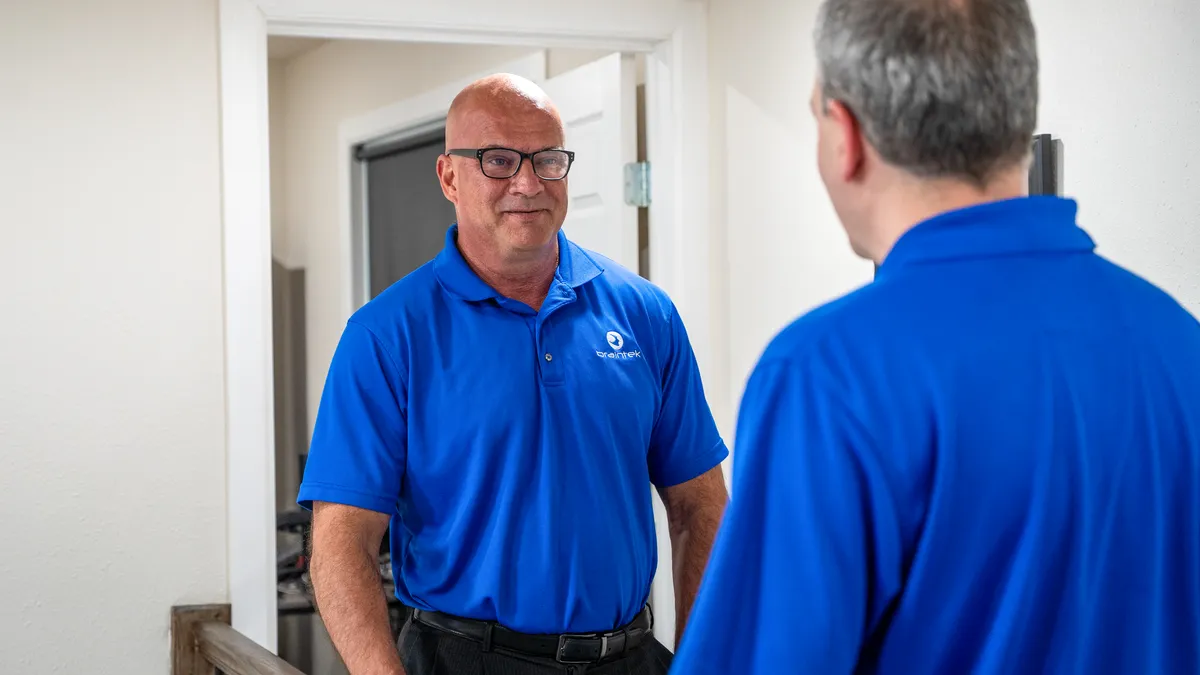
Why Braintek
A Different Kind of IT Company
We built Braintek to be the IT partner Houston business owners actually want — responsive, proactive, and straight with you.
-
Fast, local support
Real technicians who know your network. Calls are answered in about 60 seconds and a technician is typically working your issue within about 10 minutes, with same-day on-site across the Houston metro.
-
Security built in
MFA, endpoint detection, patching, backup, and awareness training are part of managed IT — not surprise add-ons.
-
On-site when you need it
Scheduled and as-needed on-site visits across the Houston metro, from a technician who already knows your network.
-
Proactive, not reactive
We prevent problems with monitoring and a real IT strategy instead of just reacting when something breaks.
-
AI that helps you grow
We help you put AI and automation to work safely — saving time and money instead of leaving you behind.
-
Integrity, always
Clear terms, plain English, and we never hold your data or systems hostage. Ever.
Back
Our promise to you
Your "Thrilled Today" Or You Don't Pay
If you're ever dissatisfied with any service for any reason, we'll make it right at no charge — or refund that month of service. New agreements also come with a 90-day risk-free start: cancel anytime in the first 90 days, no fees, no penalties.
See our full guarantee →Your first 60 days
A Proven Onboarding Roadmap
From the day you sign, here's exactly how we take over your IT — fix what's broken, lock it down, and set up support that just works.
- Day 1
Sign & welcome
You sign your agreement and receive a welcome letter explaining exactly how to reach our support desk. We request your network documentation and lock in the onboarding schedule.
- Week 1
Order equipment & licenses
Based on your agreement, we order any hardware and software licenses your team needs — so nothing holds up the rollout.
- Week 1–2
Onboarding kickoff
Your account manager and onboarding technician meet your staff. We rotate passwords, import documentation, install our monitoring and security tools, and surface hidden risks.
- Weeks 2–6
Projects & fixes
We finish migrations, server setups, and replacements — quoting and scheduling the work, and resolving the urgent issues first so your network runs efficiently.
- Week 6
Your dedicated onsite admin
We assign your permanent onsite network administrator and set a regular visit schedule, sized to the number of devices on your network.
- Day 60
Fully supported & secured
Support is live for your whole team and scheduled visits begin. Monthly security-awareness training and simulated phishing kick off, and your account manager sets recurring reviews.
In their words
Why Houston Businesses Stay With Braintek
We almost never have an issue, and in the rare instance that we do, Braintek always has a solution. Most of the other companies I've worked with in the past tended to be a bit more reactive.

Braintek has been very quick to respond to phone calls, work orders and issues. Every other firm I have worked with has been a "leave a message and wait" type company.

We've been in business with Braintek for more than six years — that says a lot. Their technicians are very knowledgeable, and they've fulfilled our IT needs at one fixed monthly rate.

Industries
Specialized IT for Your Industry
Compliance, uptime, and security tuned to how your business actually works.
 CPAs & Financial FTC Safeguards & financial data security
  Healthcare & Medical HIPAA-compliant IT for practices
  Manufacturing Uptime, OT, and CMMC / NIST 800-171
  Construction IT that works in the office and the field
  Oil & Gas / Energy Security and uptime for energy
  Law Firms Confidentiality, deadlines & secure IT
  Professional Services IT for firms that bill by the hour
  Small Business Full IT department for 10–200 employees
  Engineering Firms IT support for engineering & architecture firms
  Doctor's Offices HIPAA IT sized for independent practices
 Local coverage
IT Support Across Houston & Dallas–Fort Worth
Two Texas offices, on-site and remote support for businesses throughout both metros.
Trusted in Houston
4.9 Stars From 367 Local Businesses
For 20+ years, Houston companies have trusted Braintek to keep their technology running and their business protected.
About BraintekIT Support and Managed IT Services in Houston, TX
Most Houston business owners do not go looking for an IT company until something has already gone wrong. A server dies the week of a deadline, an invoice gets paid to a spoofed vendor, or the person who "handles the computers" leaves and takes every password with them. By the time the search starts, the question is rarely "what is managed IT" and almost always "who can I actually reach when this happens again."
This page is the long version of our answer. It covers what IT support includes, how managed IT differs from the break/fix model most small companies start with, what it costs in this market, and what to ask before you sign with anyone, us included.
What IT support actually covers
"IT support" gets used loosely. In practice it spans four different jobs, and a lot of frustration comes from hiring someone who only does one of them.
The help desk
Day-to-day problems: a laptop that will not connect, a mailbox that stopped syncing, a printer that vanished from the network, a file someone deleted. This is the volume work, and it is where response time is felt. Braintek clients typically reach a live technician in about ten minutes rather than filing a ticket into a queue. Most of these issues are solved remotely in minutes.
Proactive maintenance and monitoring
The work you never see if it is being done properly. Patching operating systems and applications on a schedule, watching disk health and backup jobs, catching a failing drive or a full volume before it takes a server down, and keeping firmware and firewall rules current. Break/fix providers do not do this, which is why their clients have more emergencies.
Security
Multi-factor authentication, endpoint detection and response, email filtering, DNS filtering, patch discipline, and security awareness training for staff. Most successful attacks on companies this size are not sophisticated. They are a reused password, an unpatched machine, or an employee who clicked a convincing invoice. See our cybersecurity services for how the layers fit together.
Strategy and budgeting
Knowing what needs replacing next year, what a move or an acquisition will require, whether a line-of-business application should stay on-premise or move to the cloud, and what all of it will cost. This is the part small companies most often go without, and it is the reason technology spending feels unpredictable.
What is actually in your IT environment
When we document a new client we inventory five categories. It is worth knowing them because any provider's proposal should account for all five.
- People. Who needs access to what, who approves changes, who leaves and needs offboarding the same day.
- Network. Internet circuits, firewall, switching, wireless coverage, VPN and remote access, and any site-to-site links between offices.
- Hardware. Workstations, laptops, servers, network-attached storage, phones, and the age and warranty status of each.
- Software and cloud. Microsoft 365 or Google Workspace, line-of-business applications, accounting and CRM systems, and the licensing behind them.
- Data. Where it lives, who can reach it, how it is backed up, and how quickly it could actually be restored. The last part is the one that surprises people.
Managed IT, co-managed IT, and break/fix
These three models get conflated constantly, and the difference determines whether your provider makes money when your technology works or when it breaks.
Break/fix
You call when something is broken and pay by the hour. It feels cheaper because you only pay when you have a problem. The structural issue is incentive: the provider earns more the worse your environment gets, and nobody is responsible for prevention. Most companies outgrow this somewhere around fifteen to twenty employees, usually right after an outage that costs more than a year of managed service would have.
Fully managed IT
A flat monthly fee covers monitoring, maintenance, help desk, security, backup, and strategy. The provider now loses money when your systems fail, which aligns their interests with yours. This is what most of our clients buy. Details on our managed IT services page.
Co-managed IT
You have an internal IT person or team, and they are good, but they are one deep. Co-managed adds our monitoring, security stack, after-hours coverage, and escalation path behind them, so vacations and resignations stop being emergencies. It is also how companies get enterprise-grade security tooling without buying it outright. See co-managed IT services.
What managed IT services cost in Houston
Braintek prices managed IT as a flat monthly subscription, custom-quoted after a discovery call. Across the Houston market, per-device managed IT for a business of 10 to 200 employees generally lands between $150 and $250 per device per month depending on the security stack, compliance requirements, and how much on-site work the environment needs.
Be careful comparing quotes on headline price alone. The questions that actually change the number are what is included versus billed separately, whether after-hours work is covered, whether security awareness training and backup are in the base fee or add-ons, and whether on-site visits cost extra. A cheaper agreement that excludes projects, after-hours, and on-site is frequently more expensive by the end of the year.
We publish a flat monthly figure only after a short discovery call, because quoting an environment we have not seen is how providers end up renegotiating in month three.
Emergency and after-hours IT support
Braintek's help desk is staffed Monday through Friday, 7:00 AM to 6:00 PM, with after-hours support for urgent issues after 6pm. We are deliberate about not advertising round-the-clock staffing we do not have, because the version of that promise most MSPs sell is an answering service that pages someone who calls you back in the morning.
What we do commit to is that our clients' urgent problems after hours reach a Braintek technician who already knows the environment, not a stranger reading a ticket for the first time. For businesses that need genuine overnight coverage, that is a conversation worth having on the discovery call rather than an assumption on either side. More on emergency IT support.
One Houston-specific note: we keep a group of our own employees stationed outside the Gulf Coast. When a hurricane or a hard freeze closes offices across the metro, our support does not close with it. That is not a marketing line, it is the reason we structured the team that way after watching the region lose weeks to weather.
Cloud, Microsoft 365, and email for Houston businesses
Nearly every client we onboard is already on Microsoft 365, and nearly every one of them has it configured less securely than they believe. The common gaps are legacy authentication left enabled, no conditional access, mailbox auditing off, no retention on deleted items, and global admin rights handed out years ago to people who no longer need them.
Email remains the primary way businesses this size get compromised, usually through a convincing invoice or a request that appears to come from an executive. Layered email protection plus MFA plus training closes most of that exposure. For workloads that need to move off aging on-premise servers, we handle Azure and private cloud environments, and we are honest when staying on-premise is the better economics.
Cybersecurity and compliance by industry
Houston's economy concentrates in industries with real regulatory exposure, and the right security posture is not the same for all of them.
- Energy and oil and gas: operational technology alongside corporate IT, vendor access, and a high-value target profile.
- Healthcare and medical practices: HIPAA, business associate agreements, and EHR uptime.
- CPAs and financial firms: FTC Safeguards, written information security plans, and a brutal seasonal crunch where downtime is not an option.
- Law firms: client confidentiality obligations and increasingly detailed client security questionnaires.
- Construction and manufacturing: job-site and shop-floor connectivity, and equipment that predates modern security assumptions.
If you are not sure where you stand, a cyber security risk assessment is the cheapest way to find out before an insurer or a client asks you to prove it.
Why local matters for IT support in Houston
Remote support handles most issues, so "local" is not about the drive time on a routine ticket. It matters in three specific situations: when hardware fails and someone has to physically touch it, when you are opening or moving an office, and when something regional happens and a national provider's queue fills with clients in four other states.
It also matters for accountability. Our technicians are Braintek employees, not subcontractors, and the person dispatched to your office has usually worked on your environment remotely already. We cover the Houston metro from our Spring headquarters, including The Woodlands, Conroe, Cypress, Katy, Sugar Land, Pearland, Spring, and Tomball.
How to choose an IT support company in Houston
Whether or not you talk to us, these are the questions that separate providers.
- How fast do I reach a human, and is that a target or a guarantee? Ask for the actual average, not the best case.
- Are your technicians employees or subcontractors? This determines who shows up and whether they know your environment.
- What is explicitly excluded from the monthly fee? Projects, after-hours, on-site visits, and hardware procurement are the usual carve-outs.
- How do you test that backups restore? A backup nobody has restored is a hypothesis, not a backup.
- What happens if we leave? Ask directly whether you get your documentation, passwords, and data, and how quickly. Some providers make leaving painful on purpose. We do not hold data or systems hostage, ever.
- What does onboarding look like? A provider who cannot describe the first thirty days in detail has not done it often enough.
Braintek has answered these questions for Houston businesses since 2002, and many of our clients have been with us for two decades. If you want the same answers about your own environment, book a discovery call and we will tell you what we would change, whether or not you hire us. We also publish the full list in our IT Buyer's Guide.
The IT services we provide Houston businesses
Companies use a lot of different words for this work. IT services, IT support, technology services, information technology services, managed services, IT solutions. They mostly mean the same thing: someone else takes responsibility for the technology so your team can do the job they were hired for. What follows is what that actually includes at Braintek, in plain terms.
Managed IT services
The core offering and what most of our clients buy. A flat monthly fee covers monitoring, maintenance, help desk, security, backup, patching, vendor management, and IT strategy for every covered device and user. We become your IT department rather than your emergency contact.
Practically, this means someone is watching your systems on a Tuesday afternoon when nothing appears to be wrong, noticing that a server's storage is at 88 percent and a backup job has silently failed twice, and fixing both before either becomes the reason you lose a day. That is the entire value proposition, and it is invisible when it works. Full detail on managed IT services.
IT help desk and technical support
The part your team touches every day. Password resets, mailbox problems, a laptop that will not join the network, a printer that disappeared, a document nobody can find, an application throwing an error nobody has seen before.
Volume matters less than reachability. A help desk that resolves everything brilliantly but takes six hours to answer is functionally useless to a business with fifteen people and a deadline. Braintek clients typically reach a live technician in about ten minutes, and most tickets are closed remotely in the same call. Our IT help desk is staffed by our own employees in Texas.
Cybersecurity services
Security is not a product you buy once. It is a set of layers, and the gaps between them are where companies get hurt. Ours covers multi-factor authentication across every account that supports it, endpoint detection and response on every workstation and server, DNS and web filtering, email security, disciplined patching, privileged access review, and security awareness training so your staff can recognize the message that is trying to trick them.
Most breaches at companies of ten to two hundred employees are not sophisticated. They are a password reused from a personal account, a machine that missed three months of updates, or a convincing email about an unpaid invoice. The unglamorous layers stop the overwhelming majority of it. See cybersecurity services and our risk assessment.
Data backup and disaster recovery
Every provider says they do backups. The question that separates them is how recently someone restored one and how long it took. A backup that has never been tested is a hypothesis.
We run layered backup covering local and offsite copies, we monitor that jobs actually complete, and we test restores rather than assuming. We also plan for the recovery time your business can actually tolerate, because "we can get you back in four days" is a different product than "we can get you back before lunch," and you should know which one you are paying for. More on backup and disaster recovery.
Microsoft 365 and email
Almost every business we onboard already runs Microsoft 365, and almost none of them have it locked down. The recurring findings are legacy authentication still enabled, no conditional access policies, mailbox auditing switched off, no retention on deleted items, and global administrator rights granted years ago to people who have since changed roles or left.
Email is still the front door for attacks on businesses this size. Layered email protection, MFA, and training close most of that exposure, and none of it requires replacing anything you already own.
Cloud services and Azure
Cloud is a tool, not a destination. Some workloads belong in Azure, some belong in a private cloud environment, and some are cheaper and faster staying on a server in your building until that server ages out.
We will tell you which is which for your environment, including when the honest answer is that migrating would cost more than it saves. Providers who recommend cloud for everything are usually describing their own margin rather than your economics.
Network and infrastructure support
Firewalls, switching, wireless coverage, VPN and remote access, and the circuits underneath all of it. Most "the internet is slow" complaints are not the internet. They are a saturated uplink, a misconfigured access point, a failing switch port, or a firewall rule someone added for a vendor in 2019 and never removed.
We document the network when we onboard you, so troubleshooting starts from knowledge instead of guesswork. See business IT and network support.
Co-managed IT for in-house teams
If you already employ an IT person or a small team, you do not need replacing. You need depth. Co-managed IT puts our monitoring platform, security stack, after-hours coverage, and escalation path behind your existing staff, so a vacation, a resignation, or a project that needs four people stops being a crisis.
It is also the practical way to get enterprise-grade security tooling without buying and learning it yourself. Details on co-managed IT services.
On-site and emergency IT support
Most work happens remotely, but hardware eventually needs hands. We dispatch on-site support across the Houston metro, and because we manage your environment, the technician arriving already knows your network rather than discovering it.
For genuine outages, emergency IT support is about triage: getting the business functioning again first, then fixing the root cause properly rather than leaving a workaround in place that fails again in six weeks.
Business phones and VoIP
Phone systems that follow your people rather than sitting on a desk they no longer occupy. VoIP matters more than it used to because hybrid work broke the assumption that the person you are calling is in the building.
IT consulting and technology strategy
The planning layer. What needs replacing next year, what a second office will require, whether a line-of-business application should be upgraded or replaced, what your technology budget should look like, and what a merger or an acquisition will mean for your systems.
This is the piece companies most often skip, and it is why technology spending feels like a series of surprises rather than a plan. It is included in our managed agreements rather than billed as a separate consulting engagement.
AI and automation
Braintek builds and runs AI internally, which is unusual for an MSP our size and is the reason we can advise on it honestly. We help clients put AI and automation to work without handing company data to services that will train on it. That includes practical guardrails, tooling choices, and knowing which tasks are genuinely worth automating and which are not. See AI services.
What is not included, and we will say so upfront
We do not do residential computer repair, phone screen replacement, or consumer virus removal. We are a business IT company serving organizations of roughly ten to two hundred employees. If you are a home user, a good local repair shop will serve you better and cheaper than we would, and we will tell you that on the phone rather than selling you something that does not fit.
Choosing an IT support company in Houston
There are well over a hundred companies selling IT services in the Houston metro, and from the outside their websites are close to indistinguishable. Everyone claims fast response, proactive monitoring, and enterprise-grade security. Here is how to tell them apart before you sign anything.
The three kinds of IT provider you will meet
The one-person shop
Often genuinely excellent, frequently cheaper, and the right answer for a business under about ten people. The risk is concentration. One person cannot cover vacations, illness, or two emergencies at once, and if they take another job or retire, your entire institutional knowledge leaves with them. We inherit these environments regularly and the documentation is usually in someone's head.
The national or private-equity-rolled-up provider
Real depth and real tooling, but you are a small account in a large queue, and the technician who answers has never seen your network. Escalation paths are long, and account managers change frequently. If you have three hundred users this can work well. At thirty it usually does not.
The established local MSP
Enough people to cover each other, small enough that the same faces work on your environment repeatedly. This is what Braintek is, and we are describing the category honestly rather than pretending it is the only valid answer. It is the right fit for roughly ten to two hundred employees where downtime has a real cost and there is no full internal IT department.
Questions that actually reveal the difference
- What is your average time to reach a live person, not your target? Targets are marketing. Averages are measurable, and any provider with decent tooling can pull the number in a minute. If they cannot or will not, that is the answer.
- Are the technicians your employees? Many providers subcontract on-site work. It is not automatically bad, but you should know whether the person entering your office is accountable to the company you are paying.
- What is excluded from the monthly fee? The usual carve-outs are projects, after-hours work, on-site visits, hardware procurement, and anything labeled "consulting." A low monthly rate with four exclusions frequently costs more by December than a higher one with none.
- When did you last restore a client's backup, and how long did it take? A provider who does this routinely will have a story ready. One who does not will talk about backup software instead of restores.
- Who owns the documentation, licenses, and passwords? Ask explicitly what you receive if you leave and how fast. Some agreements make departure deliberately painful. Ours does not, and we will put that in writing.
- What does onboarding look like week by week? A provider who has done it many times can describe the first thirty days precisely: discovery, documentation, security baseline, monitoring deployment, then the backlog of things previous providers left broken.
- What is your client retention, and can I talk to someone who has been with you five years? Anyone can produce a happy client from last quarter. Longevity is harder to fake.
Red flags worth walking away from
Some of these are common enough to be worth naming plainly.
- A quote given without ever looking at your environment. It will be renegotiated, usually in month three.
- Refusal to provide documentation or admin credentials on request. Your systems are your systems.
- Security sold entirely as add-on line items. MFA and patching are not premium features.
- Round-the-clock support that turns out to be an answering service paging someone who calls back in the morning. Ask what happens at 2am and who specifically answers.
- Pressure to sign a long agreement before a proper assessment.
- Automatic renewal with a short cancellation window buried in the terms.
For the longer version of this, including a comparison worksheet, we publish a free IT Buyer's Guide.
Looking for IT support near you
Searches like "IT support near me" and "IT company near me" usually mean one of two things: either something is broken right now and proximity feels urgent, or you want to know that whoever you hire can physically show up.
The honest answer is that the vast majority of IT work no longer requires anyone to be in the room. Remote tools resolve most tickets faster than a drive across Houston would. Where being local genuinely matters is narrower but real: hardware failure, office moves and buildouts, new-site cabling and wireless, and regional events. During a hurricane or a hard freeze, a provider with clients in four states is triaging Houston alongside everywhere else. We are not.
Braintek operates from Spring, just north of Houston, and covers the metro with our own technicians rather than a dispatch network.
Houston metro areas we serve
Industries we know well
Houston's economy concentrates in a handful of sectors, and each carries a different regulatory and uptime profile. A provider who has never worked in your industry will learn on your budget.
- Energy, oil and gas. Corporate IT sitting alongside operational technology, heavy vendor and contractor access, and a target profile well above the company's headcount.
- Healthcare and medical practices. HIPAA obligations, business associate agreements, EHR uptime, and the reality that a practice cannot see patients when the system is down.
- CPAs and financial firms. FTC Safeguards, written information security plans, and a filing season where an outage is not survivable.
- Law firms. Confidentiality obligations plus increasingly detailed security questionnaires from corporate clients.
- Construction. Job-site connectivity, mobile crews, and project data that lives in more places than anyone realizes.
- Manufacturing. Shop-floor equipment older than modern security assumptions, and downtime measured in lost production.
- Professional services and small business. Lean teams where one unavailable system stops billable work.
Switching providers without the disruption
The most common reason companies stay with an IT provider they dislike is fear of the transition. It is a reasonable fear and a manageable one.
Our onboarding runs in a defined order. First we document the environment completely: hardware, licensing, network, credentials, backups, and every vendor relationship. Then we deploy monitoring and the security baseline, which is usually where we find the first several things nobody knew were broken. Then we work the backlog, prioritized by risk rather than by whoever complains loudest. Your existing provider does not need to cooperate for any of this, though most do.
The switch itself is rarely the disruptive part. Staying on a neglected environment is.
If you want a specific answer for your business, book a discovery call. We will tell you what we would change and what it would cost, and if we are not the right fit we will say so.
What IT support costs, and what you actually get for it
Pricing is the question everyone wants answered first and almost no IT company will answer on a website. We will get as close as is honest.
How managed IT is priced
There are three common models in this market.
Per device
You pay a monthly rate for each workstation, server, and piece of network equipment under management. It is predictable and it scales cleanly, and it is the most common structure for businesses of 10 to 200 employees. In the Houston market this generally lands between $150 and $250 per device per month depending on the security stack and how much on-site work the environment needs.
Per user
You pay per person regardless of how many devices they use. It suits companies where staff carry a laptop, a desktop, and a phone, because those three devices become one line instead of three. It gets expensive in environments with shared workstations, like a clinic or a shop floor where twenty people use six machines.
Tiered or all-inclusive
A flat monthly figure covering everything defined in the agreement. It is the simplest to budget and the easiest to compare year over year, and it is what most Braintek clients end up on. The trap to watch for elsewhere is an all-inclusive price with a list of exclusions attached.
Why we quote after a conversation instead of publishing a rate
Two companies with forty employees can differ by a factor of two in what they cost to support. A firm with modern hardware, everything in Microsoft 365, and no compliance obligation is straightforward. A firm with three aging on-premise servers, a line-of-business application from 2011 that only runs on Windows Server 2012, two locations connected by a VPN somebody configured badly, and HIPAA obligations is a different engagement entirely.
Providers who quote before looking at the environment are either padding heavily to protect themselves or planning to renegotiate once they see it. We do neither. A short discovery call plus a look at your environment produces a number we will hold to.
What should be included and what usually is not
When comparing proposals, check each of these explicitly. These are the line items that turn a cheap agreement into an expensive year.
- After-hours work. Is a Saturday server migration covered, or billed at a premium hourly rate?
- On-site visits. Included, capped at a number per month, or billed per trip plus travel?
- Projects. A migration, an office move, a firewall replacement. Almost always separate, which is reasonable, but the boundary between "project" and "support" should be defined in writing rather than decided later.
- Security tooling. Is MFA, endpoint detection, email filtering, and awareness training in the base fee or stacked on top?
- Backup. Included, and is the storage cost capped or metered by volume?
- Microsoft licensing. Usually passed through at cost or near it. Ask what the markup is.
- Onboarding. Some providers charge a one-time fee for the initial documentation and remediation. Not unreasonable, but it should not be a surprise.
What this replaces
The comparison people usually make is managed IT versus their current spend, but the more useful comparison is managed IT versus hiring. A competent internal IT generalist in Houston costs a salary plus benefits plus tooling, and you get one person with one skill set who takes vacations and eventually leaves. That same budget buys a help desk, a security specialist, a network engineer, and a strategist through an MSP, along with monitoring and security platforms that would cost a small company a lot to license alone.
The point at which internal hiring genuinely wins is usually somewhere north of a hundred employees, and even then most companies run a hybrid: internal staff for the business-specific systems, an MSP behind them for infrastructure, security, and depth. That is co-managed IT.
The problems that bring Houston businesses to us
Almost nobody switches IT providers because of an abstract desire for better service. There is usually a specific event. These are the ones we see most.
"Everything is slow and nobody can tell us why"
Usually not one thing. It is a saturated internet circuit, an undersized firewall doing deep inspection it cannot keep up with, workstations with five years of accumulated software, a wireless network with too few access points, or a server that has been swapping to disk for months. It is diagnosable in days once someone is actually monitoring the environment, and it is invisible to a break/fix provider who only appears when something is fully broken.
"We got hit"
Ransomware, a business email compromise, or a wire sent to a spoofed vendor. The first call is triage. The harder conversation afterwards is why it worked: nearly always a missing MFA enforcement, an unpatched machine, a mailbox rule an attacker created weeks earlier that nobody noticed, or a staff member with no training who received a genuinely convincing message. We handle the incident, then we close the gap that allowed it. See emergency IT support.
"Our IT person left"
Often with the documentation in their head and the passwords in their personal manager. This is the single most common reason we are called. The first two weeks are reconstruction: regaining administrative control of every system, documenting what exists, and finding out what has quietly not been working. It is always more than the client expected.
"We failed a security questionnaire"
A corporate client, an insurer, or an auditor asked for specifics and the honest answers were not good enough to keep the contract. This is increasingly common in legal, accounting, and energy supply chains, where a large customer imposes requirements on smaller vendors. Closing those gaps is straightforward work; the timeline pressure is the hard part.
"We are not sure our backups work"
Frequently they do not. The backup software reports success while excluding the one dataset that matters, or it has been failing silently for months, or nobody has ever attempted a restore so nobody knows it would take four days. We test restores rather than trusting dashboards. See backup and disaster recovery.
"We are growing and this does not scale"
The setup that worked at twelve people breaks somewhere around thirty. Onboarding a new hire takes days instead of an hour, nobody knows who has access to what, and every new application is a one-off decision. This is the healthiest reason to call, because it is planning rather than recovery.
What changes in the first 90 days
Specifics matter more than promises here, so this is the actual sequence.
Weeks one and two: discovery and control
We inventory every device, user, license, network component, vendor relationship, and backup job. We take administrative control of systems where it is missing or held by a departed employee. We deploy monitoring agents so that from this point forward we are seeing problems rather than hearing about them. This phase routinely surfaces expired warranties, unlicensed software, and at least one thing that has been broken long enough that staff built a workaround.
Weeks three through six: security baseline
MFA enforced across every account that supports it, endpoint detection deployed, patching brought current and put on a schedule, email security tuned, admin rights reviewed and reduced, and backup corrected and tested. This is where risk drops fastest, and where most of the findings from the discovery phase get closed.
Weeks seven through twelve: the backlog and the plan
We work through accumulated issues in order of business risk rather than complaint volume, and we build the technology roadmap: what is aging out, what should be replaced or consolidated, what the budget looks like over the next two to three years. By the end of the quarter the environment is documented, monitored, secured, current, and planned.
What clients tell us they notice is not a feature. It is that technology stopped being a recurring topic in management meetings.
Why Braintek
We have been doing this in Houston since 2002, which is long enough to have made most of the mistakes already. A few things are genuinely different about us and worth stating plainly.
Our technicians are our employees
Not subcontractors, not a dispatch network. The person who arrives at your office has usually already worked on your environment remotely. This sounds like a small thing until you have had a stranger show up who has never seen your network.
We built our own AI, so we can advise on yours
Most MSPs discussing AI are reselling somebody else's product. We build and run AI systems internally for our own operations, which means when we tell you what is worth automating, what is safe to send to which service, and where the actual risk sits, it comes from running it rather than reading about it. See AI services.
We staffed for Gulf Coast weather deliberately
Part of our team lives outside the Gulf Coast region. When a hurricane or a hard freeze closes offices across Houston, our support does not close with it. We structured the company that way after watching the region lose weeks, and it is the reason clients on the coast can reach us during exactly the events when they most need to.
We say no
We do not take residential work, we do not take businesses under about ten people, and we tell prospects when we are not the right fit rather than selling an agreement that will disappoint both of us. We also tell existing clients when a project they want is not worth the money.
You are never locked in
Your documentation, credentials, and data are yours, and we will say so in the agreement before you sign. Combined with the 90-day risk-free start on new agreements, the downside of trying us is close to nothing. That is deliberate, because the hardest part of this business is earning enough trust for someone to let a stranger into their systems.
If any of this sounds like your situation, the next step is a short discovery call. No obligation, no pressure, and if we are not right for you we will point you somewhere that is.
IT support terms, defined
Technology providers use a lot of jargon, sometimes to be precise and sometimes to make simple things sound complicated. These are the terms you are most likely to encounter while evaluating IT support in Houston, in plain language.
- Managed service provider (MSP)
- A company that takes ongoing responsibility for another organization’s technology for a recurring fee, covering monitoring, maintenance, help desk, security, and planning, rather than billing hourly when something breaks.
- Managed IT services
- The service an MSP delivers: proactive monitoring and maintenance, help desk support, cybersecurity, backup, vendor management, and IT strategy, usually for a flat monthly fee per device or per user.
- Break/fix
- The older model where a business calls an IT provider only after something fails and pays by the hour. Cheaper per incident, more expensive over a year, and structurally misaligned because the provider earns more when the environment degrades.
- Co-managed IT
- An arrangement where an MSP works alongside a company’s existing internal IT staff, supplying tooling, security, after-hours coverage, and escalation depth rather than replacing the internal team.
- Help desk
- The support function staff contact for day-to-day technology problems. The metric that matters is time to reach a live technician, not ticket volume.
- RMM (remote monitoring and management)
- The platform an MSP uses to watch device health, deploy patches, and resolve issues remotely. It is why a provider can notice a failing drive or a stalled backup before anyone reports a problem.
- MFA (multi-factor authentication)
- Requiring a second proof of identity beyond a password, typically a code or an app approval. It is the single highest-value security control for a small business and blocks the large majority of account-takeover attempts.
- EDR (endpoint detection and response)
- Security software on workstations and servers that detects malicious behavior rather than only matching known virus signatures, and allows a threat to be isolated and investigated. It has largely replaced traditional antivirus in business environments.
- Patch management
- Applying operating system and application updates on a disciplined schedule. Unpatched machines are one of the most common causes of a successful breach at companies of this size.
- Business email compromise (BEC)
- An attack where a criminal gains access to or convincingly imitates a business mailbox to redirect a payment, usually via a fake invoice or a spoofed executive request. It causes more direct financial loss to small businesses than ransomware.
- Ransomware
- Malicious software that encrypts an organization’s data and demands payment for its release. Recovery depends almost entirely on whether tested, isolated backups exist.
- Phishing
- A fraudulent message designed to trick a recipient into revealing credentials or approving an action. Security awareness training measurably reduces click rates.
- Zero trust
- A security approach that verifies every access request rather than assuming anything inside the network is safe. In practice for a small business it means MFA everywhere, least-privilege access, and device health checks.
- RTO and RPO
- Recovery time objective is how quickly you need systems back after an outage. Recovery point objective is how much data you can afford to lose. These two numbers determine what your backup design must actually be, and most businesses have never been asked for them.
- Disaster recovery
- The plan and tooling for restoring operations after a major failure, whether hardware, ransomware, or a regional event such as a hurricane. Distinct from backup, which is only the copy of the data.
- Conditional access
- Microsoft 365 policies that control who can sign in from where and on what device. Commonly unconfigured, and one of the most effective controls available to organizations already paying for it.
- Least privilege
- Granting each account only the access it needs. The frequent real-world failure is administrator rights handed out years ago to people who have since changed roles or left the company.
- SLA (service level agreement)
- The contractual commitment on response and resolution times. Worth reading closely: many SLAs commit to acknowledging a ticket rather than to doing anything about it.
- Vendor management
- The MSP handling support interactions with your software and service providers, so your staff are not on hold explaining a technical problem they should not need to understand.
- Shadow IT
- Software and cloud services staff adopt without IT approval. Usually well-intentioned, and a common route for company data to end up somewhere nobody is protecting or backing up.
- FTC Safeguards Rule
- A federal requirement obliging financial institutions, defined broadly enough to include many CPAs and advisors, to maintain a written information security program with specific technical controls.
- HIPAA
- The US healthcare privacy and security regulation. For a medical practice it drives access controls, audit logging, encryption, and business associate agreements with any vendor touching patient data, including the IT provider.
- SOC (security operations center)
- A team monitoring security alerts around the clock. Genuine 24-hour coverage is expensive, so ask any provider claiming it whether the overnight watch is their own staff, an outsourced service, or an alert that simply waits until morning.
- SIEM
- Security information and event management: a system that aggregates logs from across the environment so unusual patterns become visible. Valuable, and frequently oversold to businesses too small to act on what it produces.
- DNS filtering
- Blocking access to malicious or inappropriate domains at the lookup stage, before a connection is ever made. Cheap, low-friction, and stops a meaningful share of phishing and malware.
- VPN
- An encrypted tunnel giving remote staff access to internal systems. Still common, though increasingly replaced by identity-based access that does not put a device on the corporate network wholesale.
- VoIP
- Voice over IP: business phone service delivered over the internet rather than traditional lines. It matters more since hybrid work, because it lets a number follow a person rather than sit on an empty desk.
- Microsoft 365 vs Office 365
- Office 365 was renamed Microsoft 365 in 2020. The name now covers not only the Office applications but identity, device management, and security tooling, much of which businesses already pay for and never switch on.
- Cloud migration
- Moving workloads from on-premise servers to hosted infrastructure. Worth doing when it improves resilience or economics, and worth declining when it does not. An honest provider will tell you which case you are in.
- Dark web monitoring
- Watching for your organization’s credentials appearing in breach dumps and criminal marketplaces. Useful as an early warning, though the correct response is almost always the same: rotate the password and enforce MFA.
- Penetration test
- An authorized simulated attack to find exploitable weaknesses. Distinct from a vulnerability scan, which only lists known issues. Increasingly requested by insurers and enterprise clients.
- BYOD
- Bring your own device: staff using personal phones or laptops for work. Convenient and a common route for company data to leave the organization, which is why it needs an actual policy and enforcement rather than an assumption.
If a provider uses a term you do not recognize and cannot explain it simply, that is worth noticing. Ask us anything on a discovery call, or read the longer IT Buyer's Guide.
Questions
Frequently Asked Questions
What does Braintek do?
Braintek is a Houston-based IT support and managed IT services company. We run technology for small and mid-sized businesses — proactive monitoring, helpdesk, cybersecurity, backup, and IT strategy — so you can focus on running your business.
What is included in managed IT services?
Our managed IT includes proactive monitoring and maintenance, a responsive helpdesk, cybersecurity (MFA, endpoint protection, patching, and security-awareness training), data backup and recovery, vendor management, and ongoing IT strategy — all for one flat monthly fee. We tailor the exact mix to your business after a discovery call.
How fast is your IT support response time?
Calls are answered by a live technician in about 60 seconds, and a technician is typically working your issue within about 10 minutes. Roughly 85% of issues are resolved remotely, with after-hours support for urgent issues after 6pm.
How much do managed IT services cost in Houston?
Braintek managed IT is a flat monthly subscription tailored to your business — no per-ticket fees and no hourly billing for covered services. Because every environment is different, we provide a custom quote after a short discovery call so you know exactly what's included.
What is the difference between break/fix and managed IT?
Break/fix means you only call IT after something breaks, and you pay by the hour to fix it — so the provider earns more when things go wrong. Managed IT is a proactive, flat-fee model where we monitor and maintain your systems to prevent problems in the first place, which means less downtime and a partner whose interests are aligned with yours.
How do I switch IT companies without disrupting my business?
We handle the transition for you. During onboarding we document your environment, take over monitoring and security, and fix urgent issues first — typically within the first few weeks — so the switch is smooth and your team keeps working. Most clients are surprised how painless it is.
Do you provide on-site IT support or only remote?
Both. Most issues are resolved remotely in minutes, and when something needs hands on the hardware we dispatch a technician across the Houston metro. Because we already manage your environment, the technician who shows up already knows your network.
Are you a managed service provider in Houston?
Yes. Braintek is a managed service provider Houston businesses have trusted since 2002, headquartered in Spring with technicians across the metro. As a local IT support company, we deliver helpdesk, cybersecurity, backup, and IT strategy under one flat monthly fee.
What areas do you serve?
The Houston metro is our home market: Houston, Spring, The Woodlands, Conroe, Cypress, Katy, Sugar Land, Pearland, Humble, Kingwood, Tomball and the surrounding cities, with both on-site and remote support. We also serve the Dallas–Fort Worth metroplex from our Fort Worth office.
What size businesses do you support?
Small and mid-sized businesses across the Houston metro, typically from about 10 to 200 employees.
What is an MSP?
MSP stands for managed service provider. It means a company that takes ongoing responsibility for your technology for a recurring fee, rather than charging hourly when something breaks. An MSP monitors your systems, patches and maintains them, runs your help desk, handles security and backup, and plans your technology roadmap. Braintek has operated as an MSP for Houston businesses since 2002.
What is outsourced IT support?
Outsourced IT means hiring an outside company to be your IT department instead of employing that capability internally. For a business of 10 to 200 people it is usually far cheaper than a full internal team, because you get a help desk, a security specialist, a network engineer, and a strategist for less than the loaded cost of one mid-level IT hire. It also removes the single-point-of-failure risk of having one person who knows everything.
Do you provide IT support for small businesses?
Yes. Small and mid-sized businesses are our entire focus. Our practical floor is around 10 employees. Below that, a good local repair shop or a one-person consultant is usually a better economic fit, and we will tell you so rather than sell you an agreement that does not make sense.
What does IT consulting include?
IT consulting is the planning layer: what hardware needs replacing and when, whether a line-of-business application should be upgraded or replaced, what a new office or an acquisition will require, how to budget technology over the next few years, and what security posture your industry and insurers expect. At Braintek this is included in managed agreements rather than billed as a separate engagement.
Do you support networks, firewalls, and wireless?
Yes. Network and infrastructure support covers firewalls, switching, wireless coverage, VPN and remote access, and the internet circuits underneath. We document your network during onboarding so troubleshooting starts from knowledge rather than guesswork. Most complaints about slow internet turn out to be a saturated uplink, a misconfigured access point, or a stale firewall rule rather than the circuit itself.
How long are your contracts?
We offer one-year and three-year agreements, and we generally recommend three because it lets us plan and budget your environment properly rather than deferring decisions. New agreements include a 90-day risk-free start: you can cancel in the first 90 days with no fees and no penalties.
What happens in the first 30 days after we sign?
We document your environment completely, including hardware, licensing, network, credentials, backups, and vendor relationships. Then we deploy monitoring and our security baseline, which is typically where we find the first several issues nobody knew about. Then we work the remediation backlog in order of risk. Your previous provider does not need to cooperate for any of this, though most do.
Do you offer 24/7 support?
Our help desk is staffed Monday through Friday, 7:00 AM to 6:00 PM, with after-hours support for urgent issues after 6pm. We deliberately do not advertise round-the-clock staffing, because in this industry that usually means an answering service that pages someone who calls back in the morning. What we commit to is that urgent after-hours problems reach a Braintek technician who already knows your environment. If your business genuinely needs overnight coverage, raise it on the discovery call.
Can you work alongside our existing IT person?
Yes, that is co-managed IT and it is a large part of what we do. Your internal person keeps ownership of the things they do well, and we add monitoring, a security stack, after-hours coverage, escalation depth, and project capacity behind them. It means vacations and resignations stop being emergencies, and your IT person stops being on call every night.
How do you handle cybersecurity compliance?
It depends on your industry. Healthcare practices need HIPAA controls and business associate agreements, CPAs and financial firms fall under the FTC Safeguards Rule and need a written information security plan, and law firms increasingly face detailed client security questionnaires. We build the controls to match the requirement and provide the documentation you need when an auditor, insurer, or client asks you to prove it.
Do you help with cyber insurance requirements?
Yes. Cyber insurance applications now ask specific technical questions about MFA, endpoint detection, backup, patching, and email security, and answering them incorrectly can void a claim. We help you answer accurately and close the gaps that would otherwise make the policy unreliable.
Will you manage our software vendors for us?
Yes. Vendor management is included. When your accounting platform, EHR, practice management, or line-of-business application has a problem, we deal with their support so your staff does not lose an afternoon on hold explaining a technical issue they should not have to understand.
Do you procure hardware?
Yes, and we are transparent about it. We will quote hardware, and we are equally happy for you to buy it yourself if you find a better price. What matters is that it is the right specification, that it is under warranty, and that it gets configured and deployed properly.
Can you help us use AI safely?
Yes, and it is unusual for an MSP our size. Braintek builds and runs AI internally, which is why we can advise on it from experience rather than from a vendor brochure. We help clients adopt AI and automation without handing company data to services that will train on it, including which tasks are genuinely worth automating and which are not.
What reporting do we get?
You get visibility into ticket volume and response times, patch and security posture, backup success, and the hardware lifecycle so you know what is aging out. The point is that you can see whether you are getting what you pay for, rather than taking our word for it.
What if we want to leave?
You get your documentation, credentials, and data. We do not hold systems or information hostage, ever, and we will put that in writing before you sign. It is worth asking every provider you evaluate this question directly, because some agreements make leaving deliberately painful.
Ready for IT that just works?
Book a no-pressure discovery call. We'll review your setup and show you exactly where you stand.