

Out Of Office, Out Of Luck: What Happens When Your IT Breaks While Everyone’s On Vacation?
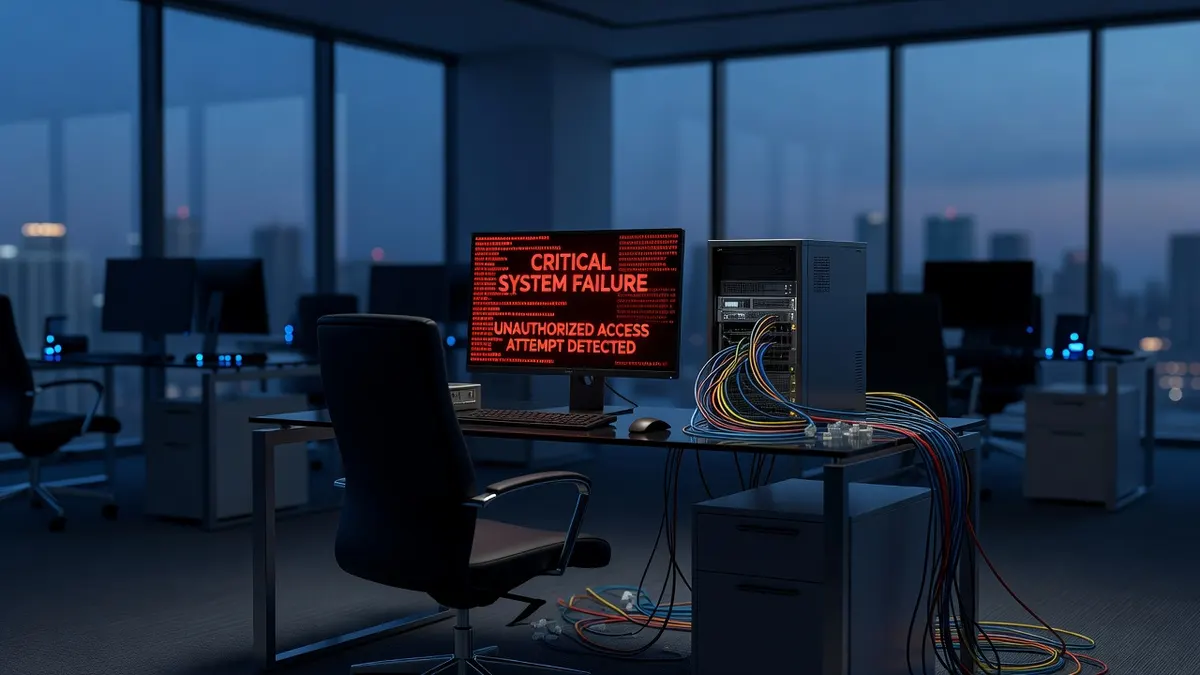
When your IT support is one person and that person is on vacation, your business has no IT support. That is the entire risk in one sentence, and summer is when it gets tested, because vacations peak at exactly the moment your team is scattered across home offices, airports, and hotel Wi-Fi.
Picture a normal June week at a Houston company. Half the staff is out. The server room air conditioning is fighting 98-degree heat. Then the file server goes down, or a vendor emails that your account was used to send phishing messages. Someone calls the IT guy, and gets an out-of-office reply with a return date nine days away. Everything after that moment is improvisation.
What Actually Breaks While Everyone Is Away?
Technology does not check the PTO calendar. The failures that hit during vacation season are the same ones that hit all year, with a couple of seasonal accelerants:
- Heat. Server closets and aging hardware fail more often in Texas summers, especially in offices where the AC gets dialed back on quiet weeks.
- Storms. Hurricane season opens June 1. Power flickers and outages stress equipment and expose whose backup plan was theoretical.
- Attackers who know your schedule. Criminal groups deliberately time attacks for holidays, Fridays, and vacation season, when response will be slowest. A phishing email that lands while the vigilant people are away gets clicked more often, and the breach that follows runs longer before anyone notices, unless Houston cybersecurity services are watching year-round.
- Ordinary entropy. Certificates expire, disks fill, updates fail. Small issues that a watched network absorbs quietly become outages on an unwatched one.
Why Does Single-Person IT Fail Exactly When You Need It?
The “call Bob when it breaks” model has a structural flaw: it depends on Bob being reachable, available, and current on your systems at the moment of failure. Vacations break the first condition. But even in-season, reactive support means:
- Downtime lasts as long as the wait. The clock starts when something breaks and does not stop until a specific human frees up.
- Nobody is watching between calls. Reactive support only sees problems you report. Slow-burn issues, failing drives, quiet intrusions, misfiring backups, go unreported because nobody knows about them.
- Knowledge lives in one head. If your network’s passwords, configurations, and quirks exist only in one person’s memory, that person’s absence is an outage risk all by itself.
- Small becomes big. A problem caught Tuesday is a ticket. The same problem discovered the following Wednesday is a crisis.
None of this is a criticism of Bob. It is a criticism of a model with a single point of failure, which is the one design flaw IT people spend their careers eliminating everywhere else.
What Does Coverage Without Gaps Look Like?
The alternative is a team model with monitoring, and it changes the story in four specific ways:
- Monitoring never takes PTO. Automated systems watch your network around the clock, flagging failing hardware, suspicious logins, and stalled backups before they turn into outages. Most issues get fixed before you would have noticed them.
- A team answers, not a person. With a staffed help desk, someone qualified picks up regardless of who is at the beach. Your support does not have a single human dependency.
- Documentation replaces memory. Your configurations and credentials live in maintained systems, so any engineer on the team can work on your environment competently.
- Recovery is pre-planned. Patching happens on schedule, backups get tested, and a disaster recovery plan exists in writing before hurricane season, not during it. That is the substance of a real managed IT services relationship: prevention as the default, with response as the backstop.
What Does the Gap Cost?
Industry estimates put small business downtime anywhere from hundreds to thousands of dollars per minute once you count idle payroll, lost sales, and recovery work. Stretch an outage across the multi-day gap of a vacation absence and the total dwarfs what year-round coverage costs. A breach that runs undetected for a week adds legal exposure and reputation damage on top.
The uncomfortable question for any owner reading this in June: if your key IT person disappeared for two weeks starting tomorrow, would anything be watching your network tonight?
If the answer is no, or you are not sure, that is worth a 15-minute conversation before summer tests it for you.