

George Foreman and the Power of a Second Act
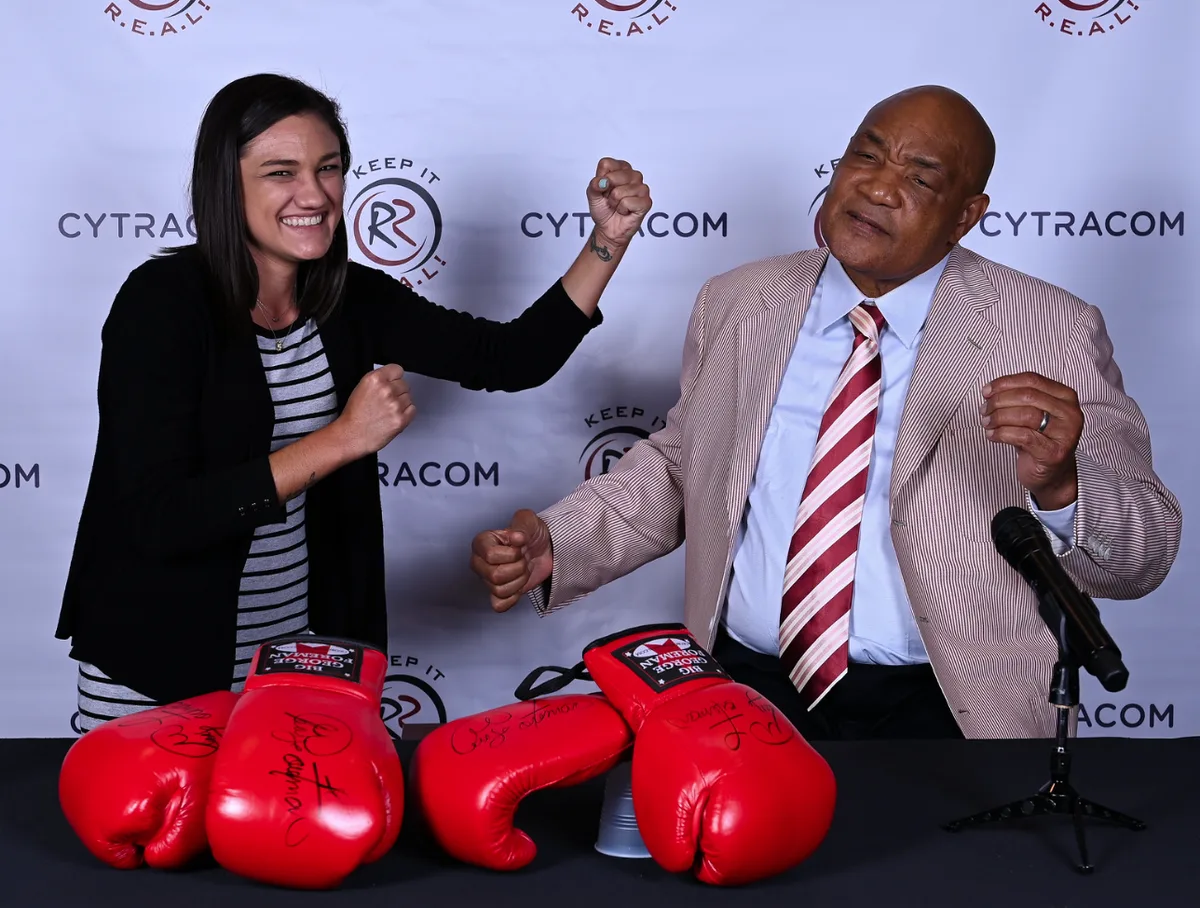
The biggest lesson George Foreman ever taught wasn’t about boxing. It was that a second act is a decision, not an accident. He rebuilt his career at an age when everyone said he was finished, and the same principle applies to any business still running on the tools that got it started.
We got to meet him in person, and the photo above is one of my favorites. Sabrina is beaming, and so is George, because that famous smile is real. What struck me most wasn’t the celebrity. It was standing next to someone who had been counted out publicly, more than once, and simply refused to accept that the story was over.
What Did George Foreman Actually Come Back From?
The short version of his career reads like three different lives. He held the heavyweight title and lost it to Muhammad Ali in the Rumble in the Jungle. He retired from boxing, became a preacher, and lost most of the money he had earned. Then, at 45 years old, he stepped back into the ring and became the oldest heavyweight champion in history.
And then came the act nobody in boxing saw coming. He lent his name to a countertop grill, and that little appliance sold more than 100 million units. An entire generation knows him as the grill guy and has no idea he ever threw a punch. That is what a complete reinvention looks like.
Why Should a Business Owner Care About a Boxer’s Comeback?
Because the pattern is identical. Every one of Foreman’s comebacks started at the moment things looked over, when coasting stopped being an option. Businesses face the same moment, except it rarely announces itself with a knockout. It shows up quietly, as a server that keeps limping along, software the vendor stopped supporting, or a process your competitors automated two years ago.
Braintek has lived this ourselves. Twenty years ago we delivered IT support by driving to offices around Houston and fixing one broken PC at a time. That model would put us out of business today. So we reinvented, more than once: break-fix became managed IT services, then we built out cybersecurity as threats got serious, then cloud, and now AI. None of those shifts happened because they were comfortable. They happened because standing still was the riskier move.
What Does a Second Act Look Like for Your Company?
For most of the small businesses we work with in Houston and Dallas-Fort Worth, a second act is not a dramatic pivot. It is a deliberate decision to stop propping up the setup that used to work. In practice that usually means one of three moves:
- Retiring the aging server in the closet and moving to cloud infrastructure that doesn’t fail during a Gulf Coast power outage
- Getting serious about security before an incident makes the decision for you, starting with an honest cyber security risk assessment
- Handing the repetitive, low-value tasks that eat your team’s week to automation and AI
The common thread in Foreman’s story is that he moved before he was forced to, even when he was already behind. You can do the same with your technology. The businesses that struggle are almost never the ones that changed too early.
If you suspect your company is due for its own second act, let’s talk it through.